Organizing a Trail Repair and Stewardship Workday or Weekend
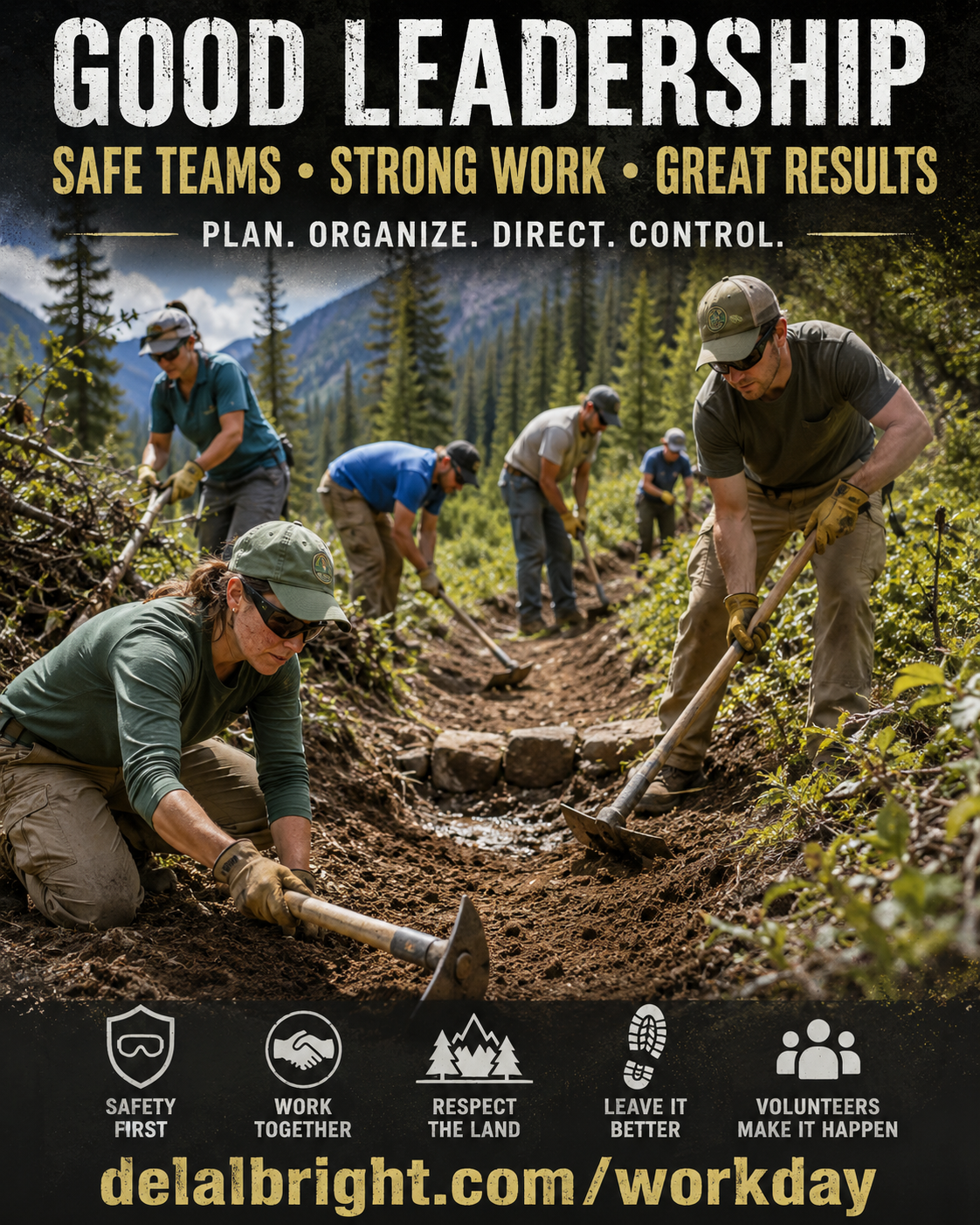
There’s an old military and fire service leadership concept that still applies today, whether you’re running a wildfire crew, leading soldiers in the field, or organizing a volunteer trail workday project out in the backcountry: Plan. Organize. Direct. Control.
Simple words. Big meaning.
If you’ve ever tried to pull together a multi-day volunteer work event with camping, hand tools, trail repairs, food, radios, safety briefings, and a bunch of hard-working volunteers showing up with high expectations, you already know one thing: If you don’t plan it well, it can turn into chaos in a hurry.
The good news is that volunteer groups are full of good people who want to help. The challenge is turning that enthusiasm into a safe, productive, worthwhile event where people go home tired, smiling, and proud of what they accomplished. That starts with leadership.
Start With Goals, Objectives, and Expectations
Before ordering supplies, assigning campsites, or sharpening tools, the project leader needs to clearly define the mission. What exactly are we trying to accomplish?
If the leader doesn’t know, nobody else will either. Clear goals and objectives help everyone stay focused and help prevent wasted time, confusion, duplicated effort, and frustration.
Some common project goals and objectives might include:
• Conduct a worthwhile and enjoyable two-day volunteer event.
• Avoid wasting anyone’s valuable time.
• Stay within the allotted budget.
• Fulfill the overall mission of the organization or agency.
• Generate positive public relations and press coverage.
• Repair one mile of water bars by the end of Day One.
• Maintain an accident-free project.
• Finish filling the large mud hole by the end of Day Two.
• Complete all drainage repairs before demobilization.
Those are measurable goals/objectives. People understand them. People can work toward them.
Just as important are expectations. Expectations define how the leader wants the project conducted. They can be very personal, as in what you want as the leader of this project, beyond obvious objectives.
Examples of Expectations might include:
• Keep me informed early if something may throw off the plan.
• Deliver what you promise; and don’t promise what you can’t deliver.
• Put yourself in the leader’s shoes and think ahead.
• Meet deadlines whenever possible.
• Make safety the number one priority.
• No surprises, please. If you see something going sideways, let me know in time for me to fix it.
• Put yourself in my shoes. Let me know what you’d like to know if you were in charge of this thing.
• Treat volunteers with respect and appreciation.
• Leave the worksite cleaner and better than we found it.
One of the biggest problems I’ve seen over the years in volunteer projects is not lack of effort — it’s lack of communication. Clear expectations prevent misunderstandings. And when expectations are clear, the job usually gets done the way the boss intended.
PLAN
Good projects don’t just happen. They are planned. The planning phase should answer the basic questions:
• What work are we doing?
• Why are we doing it?
• Who is involved?
• What tools and equipment are needed?
• How long will it take?
• What could go wrong?
• What permits or approvals are required?
• What’s the backup plan?
If you’re working with a public land agency, make sure everyone understands the approved scope of work in advance. Nothing creates problems faster than volunteers “freelancing” outside the approved project. Planning should also include safety planning that includes:
• First aid capability, emergency response protocols.
• Everyone knows the emergency evacuation routes.
• Make sure you know fire extinguisher availability.
Camping and Logistics
If volunteers are camping onsite, logistics matter. Think through:
• Camping locations
• Campfire restrictions
• Sanitation and portable toilets
• Trash removal
• Drinking water
• Parking
• Quiet hours
• Generator use
• Camp layout
• Directions to camp
• Signage if needed
People can tolerate rough conditions. What they don’t tolerate well is confusion.
Food Planning
Food can make or break morale. Decide early:
• Is chow provided?
• Is everyone self-sufficient?
• Who buys the food?
• Who cooks?
• Who serves?
• Who cleans up?
• Are dietary restrictions known?
• Is ice available?
• Is food safely stored?
A hungry volunteer crew becomes a grumpy volunteer crew. And on the other hand, a good meal at the end of a workday is one of the best ways to say thank you to volunteers.
Communications
Good communication keeps projects moving safely and efficiently. That may include:
• Handheld radios
• Cell coverage plans
• Radio channels and frequencies
• Check-in procedures
• Emergency contact numbers
• Daily briefings
Never assume everyone “just knows.”
ORGANIZE
Once the plan is built, it’s time to organize people and resources. This is where leadership becomes visible. Every volunteer project needs structure, even informal ones. People should know:
• Who is in charge
• Who the crew leaders are
• What job are they assigned
• What tools they’ll use
• Where they report
• What the daily schedule looks like
• When is chow?
• Where are sanitation facilities?
Typical assignments may include:
• Drainage repair crews
• Brush clearing crews
• Barrier installation teams
• Trail sign crews
• Chainsaw teams
• Camp support
• Food service
• Safety officers
• Radio coordinators
• Photographers/media support
Match people to jobs based on experience and physical ability whenever possible. A retired firefighter with chainsaw experience may be well-suited for saw work. (Note: most public land projects require chainsaw certifications. Check with your land management agency).
A newer volunteer may be perfect for helping with signs, cleanup, photography, or barrier construction. There are jobs for everyone. On big projects with lots of volunteers, I use people with mobility difficulties to staff the sign-in and information tables. Good leaders use people wisely.
DIRECT
This is where leadership happens in real time. A project leader’s job is not to stand around giving speeches (smile). On the other hand, a good leader does not get so deep into project work that the project itself goes undirected (unsupervised). A good project/trail workday leader’s job:
Is to:
• Keep people informed
• Keep morale high
• Solve problems
• Adjust the plan as conditions change
• Maintain safety
• Encourage teamwork
• Keep the mission moving forward
• Ensure everyone has a job and knows what it entails
Daily briefings help tremendously. Morning briefings should cover:
• Work assignments
• Safety concerns
• Weather considerations
• Communications (channels, emergencies, protocol)
• Schedule
• Equipment needs
• Project goals/objectives for the day
People work harder when they understand the mission. Leaders should also circulate throughout the worksite regularly. Don’t disappear. Visible leadership matters.
CONTROL
“Control” doesn’t mean being a dictator. It means maintaining accountability, coordination, and quality control. A project can easily drift off course if nobody is monitoring its progress.
Control includes:
• Tracking project completion
• Monitoring safety
• Adjusting crews as needed
• Watching timelines
• Managing supplies
• Staying within budget
• Coordinating with agencies
• Preventing scope creep (where the project gets bigger than intended)
Sometimes the smartest leadership decision is slowing down. Or stopping work entirely if conditions become unsafe. Strong leadership is not about ego. It’s about responsibility and controlling the flow and outcome of a workday.
Volunteers Deserve Good Leadership
One thing I’ve learned over decades of public service, wildland fire, military leadership, and volunteer work is this: Volunteers are giving you something valuable.
Their time.
Their fuel money.
Their weekends.
Their equipment.
Their energy.
Their trust.
That’s no small thing. The least we can do as leaders is respect that commitment by running organized, safe, and productive projects that are worthwhile and meaningful. When people leave camp on Sunday afternoon, tired, dirty, sore, smiling, and proud of what they accomplished, you probably did something right.
That’s how stewardship grows. That is how organizations and causes build credibility. And that’s how trails, roads, campsites, and public lands stay open and cared for by the very people who use and love them.
Some people call it building a “tribe” of supporters and followers. Others call it building a community invested in the mission. Whatever label we put on it, long-term stewardship is built on a solid foundation of leadership, commitment, dedication, communication, and good organization.
People want to be part of something worthwhile. Good leadership gives them that opportunity.
Plan. Organize. Direct. Control.
The old system still works.