
A Backcountry Reality Check for Four-Wheelers, Overlanders, and Desert Travelers
By Del Albright
There’s an old saying floating around military circles, wildfire camps, overlanding gatherings, and desert adventures:
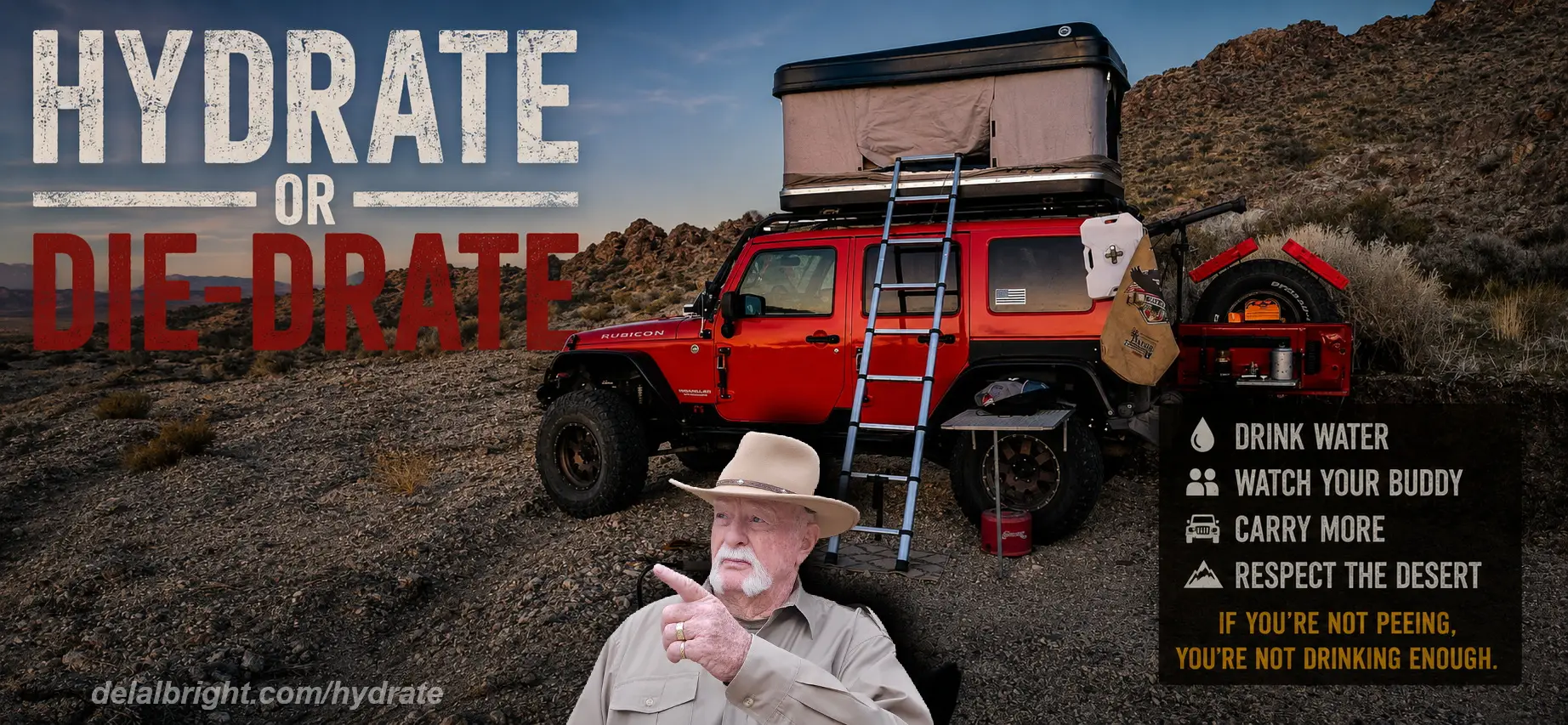
“Hydrate or die-drate.”
Funny? Sure. But out in the backcountry, it’s also true. I’ve spent decades leading Jeep trips, overland adventures, wildland fire operations, and backcountry tours in some of the hottest country in the West. Death Valley. The Mojave. Sand dunes. Remote Nevada. Utah slickrock and Arizona saguaro cactus country. Dry mountain ranges where shade is just a rumor.
And through all those years, one phrase became almost a tradition over the radio on my trips: “If you’re not peeing, you’re not drinking enough water.”
People laugh when I say it. Then they remember it. And that matters, because dehydration doesn’t usually hit like a lightning bolt. It sneaks up on people. Quietly. Gradually. Sometimes dangerously.
Hydrate – The Backcountry Doesn’t Care How Tough You Are
Dehydration doesn’t care if you’re:
- An experienced wheeler
- Former military
- Young and strong
- In great shape
- Driving an expensive rig
- “Only going out for a few hours”
Heat, sun, dry air, altitude, wind, dust, stress, caffeine, and fatigue all work together against you. And here’s the dangerous part: By the time you feel thirsty, you may already be behind.
Most people think dehydration just means “being thirsty.” Nope. The warning signs can show up long before that:
Early Signs
- Dry mouth
- Headache
- Fatigue
- Muscle cramps
- Feeling unusually irritable
- Dark yellow urine
- Not urinating much
- Dizziness when standing
- Brain fog or poor decisions
Serious Signs
- Confusion
- Nausea
- Rapid heartbeat
- Chills despite heat
- Loss of coordination
- Extreme weakness
- Heat exhaustion
- Heat stroke
And in the backcountry, poor decisions can turn dangerous fast. People miss turns and get lost. Spotters pick bad lines, and vehicles get jammed up. Arguments arise in camp that never would have happened otherwise. A dehydrated brain doesn’t think clearly.
Watch Your People — The “Swim Buddy” Mindset
One of the best lessons I learned in the military was the concept of the swim buddy. Yeah, I was a “frogman.” You always looked out for somebody else. Not sometimes, but all the time. That idea belongs in backcountry travel, too. Because dehydrated people often don’t realize they’re dehydrated.
As a trail leader or travel partner, watch for:
- Quiet behavior from normally social people
- Slowed reactions
- Irritability
- Poor balance
- Forgetfulness
- Stumbling
- Flushed face
- Glassy eyes
- Someone suddenly saying, “I’m fine” when they clearly aren’t
Sometimes the strongest people are the worst at admitting trouble. That’s where good partners matter. A solid trail group watches out for each other.
A difficult concept for some to grasp is that water is more important than the goodies on your rig! You can have bad-azz lockers and t-cases, winches, big knobby tires, satellite comms, whatever… but if you run low on water, none of that matters much. Water is survival gear. Treat it that way.
How Much Water Should You Carry?
The old desert rule:
- One gallon per person per day minimum
But honestly? For desert wheeling or summer travel, I like more. This is especially important if:
- You’re exerting yourself
- Hiking
- Recovering vehicles
- Camping overnight
- Traveling remotely
- Leading groups
I personally believe in redundancy when it comes to drinking water and emergency reserve water. Also, never rely on a single container. I’ve been on overlanding trips where my fancy plastic water jug bit the dust (cracked) and leaked out all the water on my floorboards. That’s where something solid and well-made, like a Rotopax, ensures you have a water supply in the harshest travel conditions.
Backcountry rigs should always have dedicated water storage.
Smart Practices:
- Store some water inside the cab
- Store reserve water separately
- Keep water accessible without unloading gear
- Freeze some bottles before trips
- Label non-potable water clearly
- Carry extra for unexpected breakdowns
And here’s another lesson: If you think your trip will take four hours…prepare for twelve. The backcountry has a way of changing plans.
Electrolytes matter too. Water alone isn’t always enough in extreme heat. Sweating hard means you’re also losing key nutrients like sodium, potassium, and magnesium. That’s where electrolyte drinks or powders can help. But don’t overdo sugary energy drinks or heavy caffeine. They can work against hydration if abused.
I have found that I have to spend a bit more to get better, healthier electrolyte drinks/powders. It’s worth it.
Simple works best:
- Water
- Electrolytes
- Steady intake
- Regular breaks
And yes…sometimes adding a little flavor encourages people to drink more water. That counts.
The “I Don’t Want to Stop” Problem
A lot of people under-drink because they are in a hurry, just don’t want to stop to pee, and want to push through to camp or the next site. There are also folks who feel bad about slowing down the group and won’t ask to stop. That mindset gets people in trouble. Smart travelers take care of themselves before they become the problem.
Think of hydration as part of leadership. Trail leaders especially need to set the tone. If the leader never drinks water, never rests, and acts invincible, the group often tries to copy that behavior.
Instead, a good trail leader will:
- Call hydration breaks
- Remind people to drink
- Normalize rest
- Check on quieter travelers
- Watch older travelers and kids carefully
- Encourage the “swim buddy” idea
- Lead by example
Good leadership (and teamwork) in the outdoors is often quiet and simple. Sometimes it’s just asking:
“Hey buddy…when’s the last time you drank water?”
Final Thoughts
I’ve seen dehydration sneak up on people in deserts, mountains, fire lines, and military environments. The scary part is how normal it can look at first. It sneaks up as a little headache or fatigue, with perhaps just a little confusion. Then suddenly somebody’s in trouble.
So here’s the takeaway:
Hydrate or die-drate.
Funny phrase. Serious lesson. And remember: If you’re not peeing, you’re probably not drinking enough water. Your rig can break down. Your GPS can fail. Plans can change. But staying hydrated gives you the best chance to handle whatever comes next. In the backcountry, water isn’t just a convenience; it’s life.
TRAIL TIP
Carry more water than you think you’ll need…then carry a little more. Because the backcountry rewards preparation — and punishes assumptions.
