Why “Watch the Smoke, Not the Noise” Is Still One of Life’s Best Lessons
During my years as a wildland firefighter and fire chief, I learned a lesson that has served me well far beyond the fire line. It’s simple advice, but it applies to almost everything in life:
Watch the smoke, not the noise.
Here’s what I mean about wildfire, smoke, and life lessons.
When a wildfire starts, there is always noise. The radio lights up. People call in reports. Rumors spread. People are scared and demanding updates. Somebody says the fire is moving east. Somebody else swears it’s headed west. Everyone has an opinion, and everyone wants to be the first to tell you what’s happening.
It’s a lot of noise, and it can be incredibly confusing.
But experienced firefighters learn to focus on something different.
The smoke.
The smoke tells you where the fire really is. It tells you how much fuel is burning, how hard it’s burning, and often where it’s headed. While everyone else is reacting to reports, opinions, and emotions, seasoned firefighters are looking for indicators, evidence, and facts.
(Note: There is much more to wildland firefighting and reading smoke than this simple explanation, but you get the idea.)
I’ve found that same lesson applies to leadership, public lands, volunteer organizations, business, politics, and everyday life.
Today, we’re surrounded by noise. Social media gives everyone a microphone. News cycles run 24 hours a day. Rumors spread faster than facts. Every issue seems to generate a flood of opinions, predictions, accusations, and outrage before anyone has time to examine what’s actually happening.
I’ve watched this happen repeatedly in the public lands world.
A new policy is announced, and people immediately declare it a victory or a disaster. A lawsuit gets filed, and folks assume they already know the outcome. An agency releases a proposal, and social media lights up with speculation before anyone has even read the document.
The quacking begins immediately.
That’s noise.
The smoke is something different. The smoke amounts to reading the proposal yourself. The smoke is studying the map. The smoke is attending the public meeting. The smoke is communicating with agency personnel, stakeholders, and people directly involved in the process.
The smoke is looking for facts instead of assumptions.
The same thing happens in organizations. Sometimes leaders get distracted by complaints, gossip, or the loudest voices in the room. Meanwhile, the real indicators are sitting right in front of them. Participation is declining. Volunteers are burning out. Projects aren’t getting completed. Trust is slipping away.
Those are the smoke columns that deserve attention.
As I’ve gotten older, I’ve become less interested in the noise and more interested in the evidence. That’s not to say the noise has no value. Sometimes it can point you toward an issue worth investigating. But it should never be the basis for your decision-making.
Don’t let the noise be the basis for your decision-making.
Whether you’re managing a wildfire, leading a volunteer project, advocating for public lands, running a business, or simply trying to make sense of the world around you, the principles remain the same:
Slow down.
Look for facts.
Find the evidence.
Trust experience.
Watch the smoke.
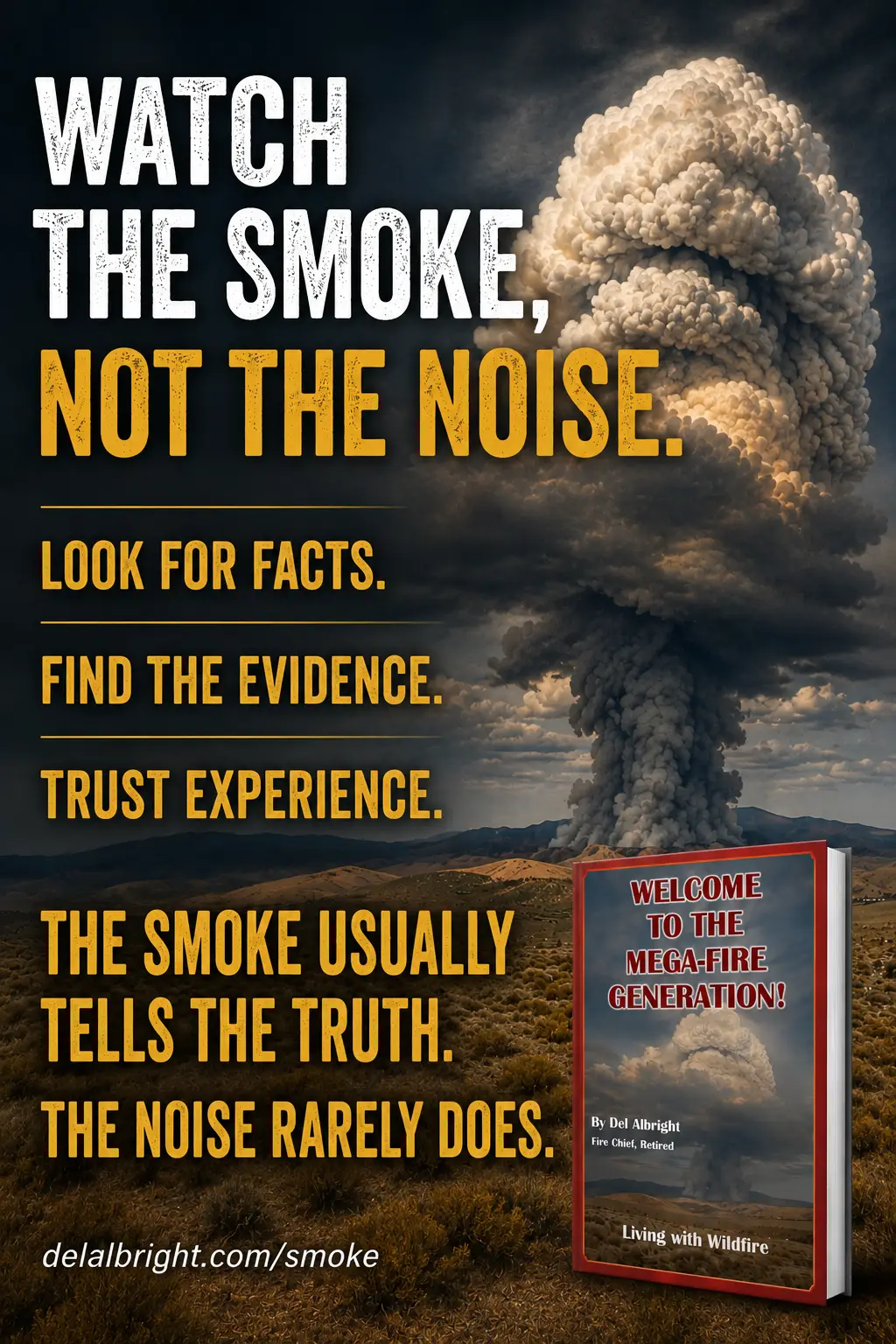
Because the smoke usually tells the truth. The noise rarely does.
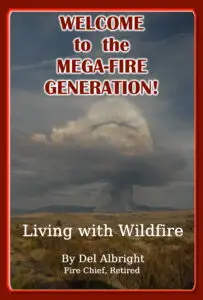
I explore this concept in greater detail in my book Welcome to the Mega-Fire Generation.