Why Bigger Wildfires Are Not Inevitable
By Del Albright, Retired Fire Chief
Twenty-five years ago, we didn’t know there was a mega-fire generation. Back then, a 10,000-acre wildfire was a major event. Today, fires of 100,000, 300,000, and even 500,000 acres have become part of the annual conversation across the American West. That should concern all of us.
As a retired fire chief with more than three decades of public service, including 26 years in the fire service, I’ve watched wildfire evolve from an occasional disaster into a seasonal expectation. Somewhere along the way, we stopped asking a critical question:
Why have these fires become so large in the first place? The answer is complicated.
Yes, weather plays a role.
Yes, drought plays a role.
Yes, climate conditions matter.
And yes, fire agency budgets, staffing, and training play a role.
But none of those factors fully explain why so much of the West now burns with an intensity and scale that would have been almost unimaginable a generation ago.
The uncomfortable truth is that many of today’s mega-fires are fueled by decades of accumulated vegetation, overcrowded forests, declining access infrastructure, and the steady reduction of active land management practices that once helped keep wildfire in check.
The Fire Problem We Created
For thousands of years, fire was part of the landscape. Native Americans used fire as a land management tool. Ranchers used controlled burning to improve grazing conditions. Land managers thinned forests and maintained fuel breaks. Timber harvesting removed excess biomass while providing jobs and supporting rural communities.
None of these practices eliminated wildfire. But they helped prevent catastrophic wildfire.
Over time, many of those management tools became increasingly difficult to use. Regulations and restrictions expanded. Projects became more expensive and time-consuming. Environmental reviews lengthened. Litigation increased. Public controversy grew.
The result was not always intentional, but the outcome is hard to ignore:
Many forests became denser.
Fuel loads increased.
Dead and dying trees accumulated.
Brush fields expanded.
And when fires started, they had far more fuel available than they once did.
Prescribed Fire: One Tool We Need More Of
One of the most effective tools available today remains one of the oldest.
Prescribed fire works. It reduces fuel loads, improves wildlife habitat, and restores ecological balance. It can help prevent the explosive fire behavior that threatens communities and firefighters alike.
Fortunately, many agencies are beginning to recognize this reality and are working to expand prescribed burning programs. The challenge is scale. We are treating thousands of acres while millions of acres need attention. We need more support for prescribed fire—not less.
Access Matters
One lesson firefighters learn quickly is that access saves time. Maintained roads, fuel breaks, and strategic access routes allow firefighters to reach fires while they are still small. They provide safe locations for suppression efforts and emergency operations.
Across much of the West, access infrastructure has declined. Roads have been decommissioned or left unmaintained, maintenance budgets have shrunk, and vegetation has reclaimed many historic access routes.
Don’t get me wrong, not every road should remain open forever. But we should be having honest conversations about the role access plays in both recreation and wildfire management, and which maintenance programs we should invest in.
Forest Health Requires Active Management
Healthy forests are not always untouched forests. In many areas, thinning, timber harvest, vegetation management, invasive species control, and fuel reduction projects remain important tools.
Likewise, our grasslands and deserts face their own challenges. Invasive species such as cheatgrass have altered natural fire cycles across large portions of the West, creating landscapes that burn more frequently and recover less effectively.
The question should not be whether management occurs.
The question should be what management approaches produce the healthiest landscapes and safest communities.
Stewardship Is Not Someone Else’s Job
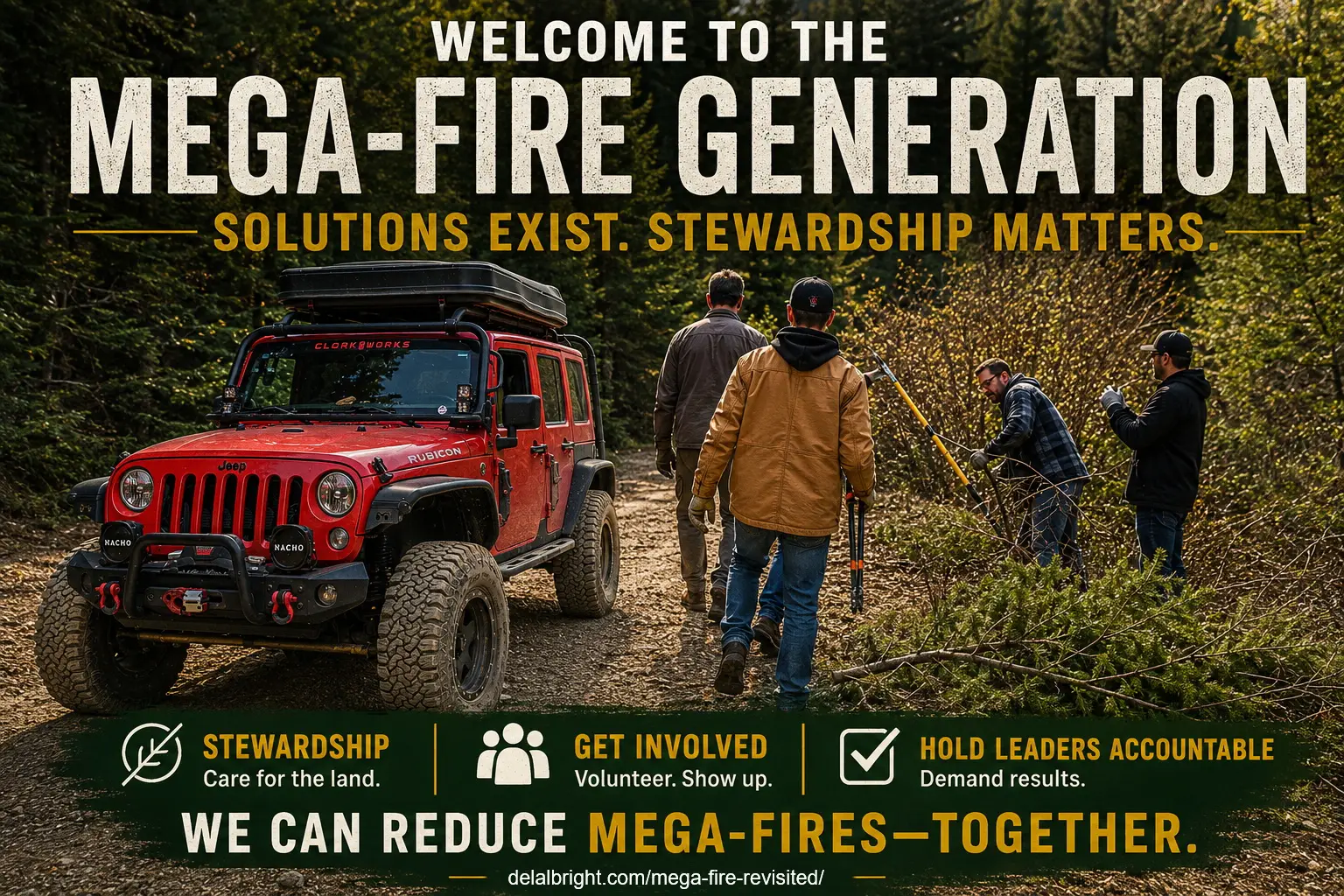
This is where you and I come in. Too often, people assume wildfire management is solely the responsibility of government agencies. It isn’t. Citizens have a role to play. You can and should:
👉Volunteer for trail projects.
👉Support fuel reduction efforts.
👉Participate in community wildfire preparedness programs.
👉Attend public meetings.
👉Comment on land management plans.
👉👌Work with local land managers.
👉Help maintain access routes.
✅Join organizations that are actively engaged in stewardship.
Public lands belong to all of us, and their future depends on more than agency budgets and political debates. It depends on public involvement.
Accountability Matters in the Mega-Fire Generation
We should expect our elected officials, agency leaders, and policymakers to take wildfire seriously. That means asking hard questions like:
Are fuel reduction projects being completed?
Are prescribed fire programs expanding?
Are forest health objectives being met? Are land management agencies receiving adequate budgets?
Are management decisions producing measurable results?
Accountability is not partisan. It’s responsible citizenship.
Final Thoughts
The Mega-Fire Generation did not happen overnight. It developed over decades. The good news is that solutions exist.
We know how to reduce fuels.
We know how to improve forest health.
We know how to use prescribed fire.
We know how to engage volunteers.
We know how to build partnerships.
The question is whether we have the will to act. Wildfire will always be part of life in the American West. Mega-fires do not have to be.
The future of our forests, grasslands, deserts, and communities depends on the choices we make today. Let’s get involved. Let’s stay engaged. And let’s be part of the solution.
— Del Albright
Retired Fire Chief
Author, Outdoor Recreation & Public Lands Advocate
delalbright.com
Editor’s Note: This article updates and expands upon my original “Welcome to the Mega-Fire Generation” piece first published in 2020.
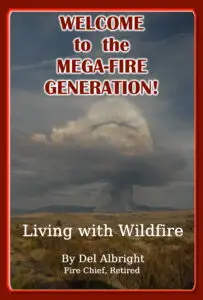
Del’s Book on Welcome to the Mega-Fire Generation
Watch the Smoke, Not the “Noise.”
Get in the Game: Simple Ways to Sustain Public Lands Access
National Interagency Fire Center (NIFC) Fire Information and Statistics