
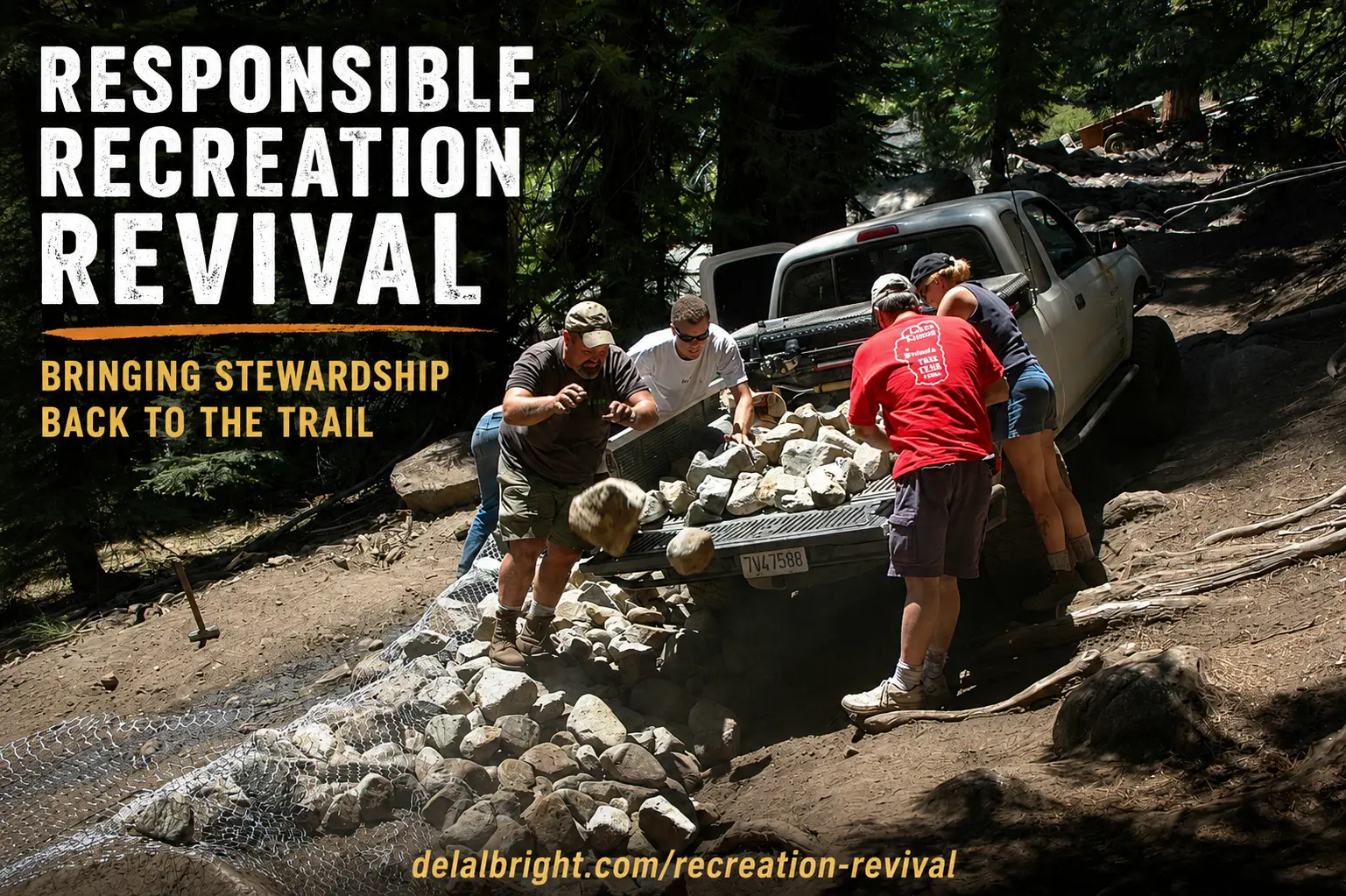
Responsible Recreation Revival (RRR)
It’s Time to Bring Back the Culture that Built Places like the Rubicon Trail
I spent a good part of my life believing that if people simply understood why we take care of our trails, they’d do the right thing. Back in the early 2000s, that belief became the foundation for Friends of the Rubicon (FOTR). We weren’t just moving rocks, picking up trash, or organizing work parties. We were building a culture. We wanted every person who drove the Rubicon Trail to leave understanding that the privilege of access came with a responsibility to care for the place.
IF YOU WANT TO DO SOMETHING ABOUT THIS – share this message with your own two cents added and do more than post on social media!
I’ve been thinking about what’s changed on many of our favorite trails. The vehicles are better than ever. Bigger tires. Better suspensions. More technology. GPS. Recovery gear. Cameras everywhere. Yet something important seems to be missing.
The culture.
In 2001, when we started Friends of the Rubicon (FOTR), our mission wasn’t simply to fix trails or organize work parties. It was to build a community of responsible recreation.
Back then, experienced wheelers took newcomers under their wing. We packed out trash because that’s what responsible wheelers did. We repaired trail damage because we understood that every rut, every bypass, every careless act became ammunition for those who wanted to close our public lands. We taught and led by example.
We didn’t volunteer because someone made us. We volunteered because we loved the trail. But somewhere along the way, that culture began to fade.
Today’s new generation of four-wheelers often discovers the outdoors through YouTube, TikTok, Facebook, or Instagram. They see spectacular climbs, mud holes, broken parts, and viral videos—but far too rarely do they see trail stewardship, volunteer workdays, proper etiquette, or the responsibility that comes with access to public lands.
That’s not entirely their fault. If no one teaches them, how are they supposed to know?
That’s why I believe it’s time for a **Responsible Recreation Revival.**
Not another organization. Not another set of rules. But a revival. A movement that reminds all of us why places like the Rubicon still exist.
The truth is simple. Access isn’t permanent. Public lands don’t stay open by accident, and trails don’t maintain themselves. And people don’t learn unless we teach them.
Someone always pays the price for keeping recreation alive. Usually, it’s volunteers. It’s clubs. It’s partnerships and people quietly showing up with chainsaws, shovels, trash bags, welding equipment, meeting agendas, comment letters, and a willingness to work with land managers instead of against them.
That’s the side of recreation that rarely goes viral. But it’s the side that matters.
A Responsible Recreation Revival starts with experienced outdoorsmen and outdoorswomen deciding to become mentors again.
A Responsible Recreation Revival Starts with Us and this “RRR Code of Conduct:”
- Invite a newcomer along. Introduce them to responsible recreation before social media teaches them the wrong lessons.
- Lead by example. Every camp, every trail, every conversation is an opportunity to demonstrate respect for the land and for fellow recreationists.
- Teach the “why.” Explain why we stay on designated routes, avoid creating bypasses, respect seasonal closures, and leave gates exactly as we found them. People are far more likely to do the right thing when they understand the reasons behind it. Carry brochures and handouts.
- Share recovery skills responsibly. Show how to recover a stuck vehicle safely and with minimal impact on the trail, rather than turning recovery into entertainment.
- Leave every place better than you found it. Pick up litter, remove abandoned debris when it’s safe to do so, and take pride in improving the places you enjoy.
- Introduce someone to volunteerism. Bring them to a trail workday, a cleanup event, a restoration project, or a club meeting. Stewardship is contagious.
- Promote good behavior online. Use your social media to celebrate responsible recreation, volunteer projects, good trail etiquette, and positive examples worth repeating.
- Don’t glorify bad behavior. Avoid posting videos or photos that encourage reckless driving, resource damage, illegal routes, vandalism, or disrespect for public lands—even if they attract clicks and views.
- Have the courage to speak up. When you see irresponsible behavior, address it respectfully. A quiet conversation on the trail—or a thoughtful comment online—can prevent others from thinking destructive behavior is acceptable. On the Rubicon in the old days, we started a Volunteer Trail Patrol to help spread the word – from the good book.
- Represent the entire recreation community. Remember that every photo, video, and comment shapes how the public and land managers perceive all of us.
- Support the organizations that protect access. Volunteer your time, donate when you can, attend meetings, and encourage others to get involved. Open trails don’t happen by accident. Be obvious with your support of organized recreation. Get businesses to jump in with you and be blatant about their support of responsible recreation.
- Pass it on. Your greatest legacy won’t be the obstacles you conquered. It will be the people you inspired to care enough to keep these places open for generations to come.
The goal isn’t to build better four-wheelers. It’s to build better stewards.
I’ve spent more than fifty years working in public lands, wildland fire, volunteer organizations, and recreation advocacy. One lesson stands above the rest:
**Education beats enforcement every time.**
People protect what they understand. People value what they help build. And people become lifelong stewards when someone takes the time to teach them.
This isn’t about going back to the “good old days.” It’s about carrying forward the values that made those days good.
The next generation isn’t the problem. They’re our opportunity. If we want the Rubicon—and every other trail we cherish—to remain open for our kids and grandkids, then we need fewer critics and more mentors. We need less complaining and more teaching, less gatekeeping, and more leadership. That’s what a Responsible Recreation Revival looks like.
And I believe it’s time. Who’s with me?
Sound off right here, and let’s make this an action item list to do something positive.
