
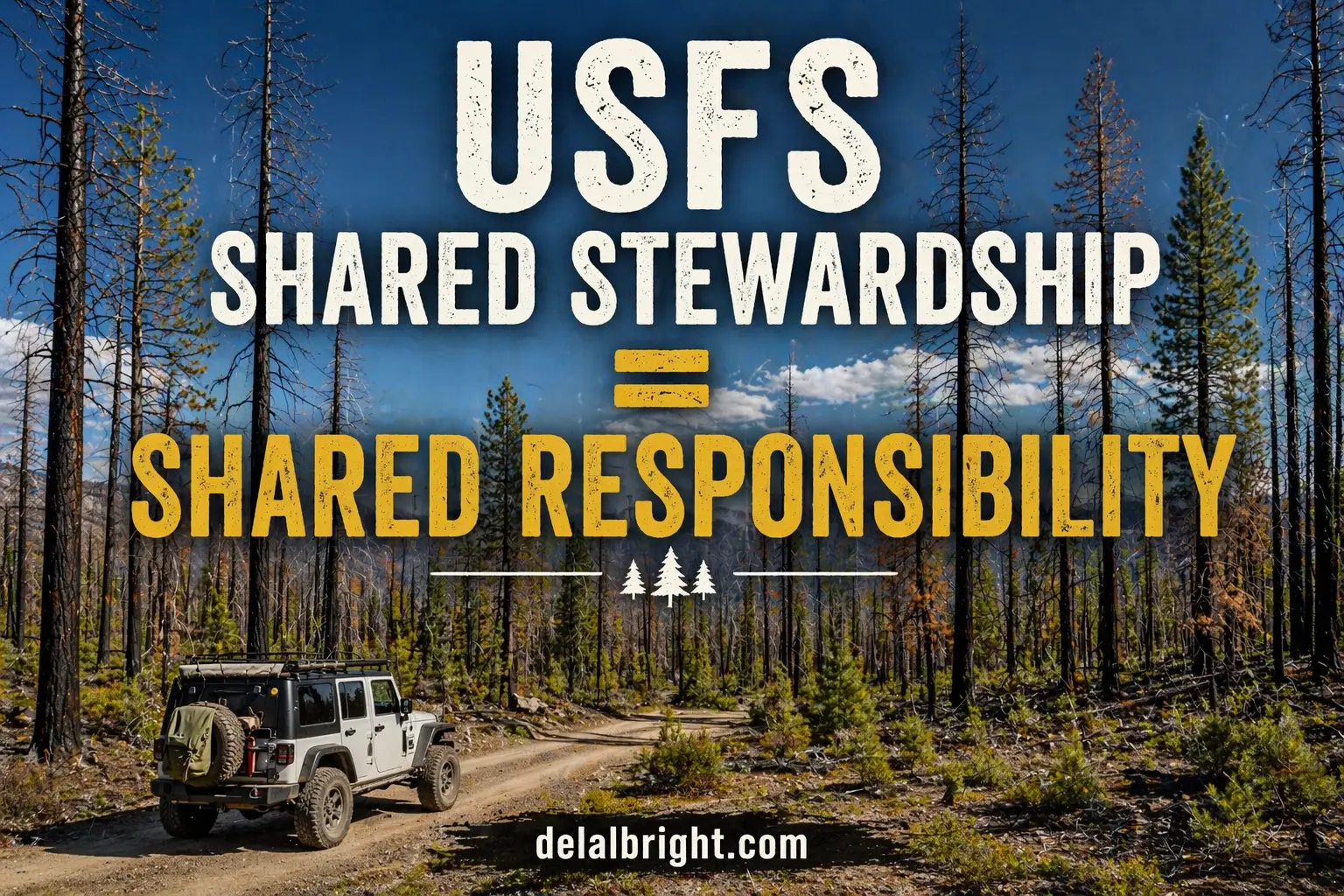
Shared Stewardship: Working Together to Protect Forests, Reduce Wildfire Risk, and Keep Access Open
There’s a hard truth about today’s forests: They don’t recognize boundary lines. Fire doesn’t stop at a fence. Insects don’t care who manages the land. And overgrown fuels don’t check a map before they burn. The ecosystem is one big, connected puzzle that requires more than a single-focused approach. The USDA Forest Service (USFS) is now emphasizing an approach to public land management that brings all the pieces of the puzzle together.
It’s called “Shared Stewardship,” and it matters now more than ever.
What Shared Stewardship Really Means
Shared Stewardship is a coordinated approach led by the United States Forest Service that brings together federal, state, local, Tribal, and private partners to manage forests as one connected landscape. Not as separate pieces, and not as competing jurisdictions. They are looking at the puzzle as a whole and bringing all the pieces together to solve it.
One landscape. One mission.
TRAIL TIP — THINK LANDSCAPE, NOT LINES
The land doesn’t care who owns it. Good stewardship doesn’t either.
Why This Matters Right Now
It’s well known that across the West—and beyond—our forests are under strain:
- Overgrown vegetation and dense fuels
- Dead and dying timber
- Increased wildfire intensity
- Growing risk to communities
- Massive landscapes destroyed by wildfire
- Decreased federal staff and budgets to conduct sound management
These are connected problems—and they require a coordinated response. It’s always been the case, but now more so than ever, all stakeholders in public lands must be united and coordinated.
We cannot fix landscape-scale issues with disconnected efforts.
Working Across Boundaries
Shared Stewardship breaks down barriers and brings partners together with a coordinated, orchestrated approach that means:
- Federal agencies lead planning and analysis
- States and locals help implement projects
- Contractors and crews handle field work
- Tribal and local knowledge guides priorities
And most important—
The work doesn’t stop at a boundary line.
Getting Work Done on the Ground
This is where the rubber meets the road when all parties come together for:
- Thinning overgrown forests
- Removing hazardous fuels
- Clearing dead and dying trees
- Restoring watersheds
- Maintaining roads and access
And when timber is managed and removed, it helps support:
- Local mills and jobs
- Rural economies
- Future restoration work
That’s real, measurable progress.
Reducing Risk Where It Matters Most
Let’s be blunt: Unmanaged forests become dangerous forests. Heavy fuel loads turn small fires into catastrophic ones.
Shared Stewardship helps by:
- Reducing fuel loads
- Breaking fire continuity
- Protecting communities
- Improving landscape resilience
More Than Forest Health
This isn’t just about trees. It also delivers:
- Better recreation infrastructure
- Cleaner water
- Healthier ecosystems
- Stronger rural economies
And yes—this matters to those of us who recreate on public lands.
Access is conditional, shared, and fragile.
Using the Tools We Already Have
Shared Stewardship makes better use of tools like:
- Cross-boundary authorities
- Shared funding and workforce
- Coordinated planning
This isn’t more bureaucracy. It’s better coordination.
A Unified Roadmap for Action
This approach builds something we’ve needed for a long time: A unified roadmap.
One that reflects:
- Local needs
- State priorities
- Tribal sovereignty
- Federal responsibilities
And turns those into real work on the ground.
Why This Matters for Recreation and Access
If you care about trails and public lands, this matters.
- Healthy forests = safer access
- Managed landscapes = fewer closures
- Strong partnerships = better outcomes
This is cooperation in action—the same principle we’ve pushed for years in responsible motorized recreation.
A Familiar Idea: Balanced Stewardship
If you’ve followed my work over the years, you’ve heard me talk about Balanced Stewardship—the idea that protecting our public lands and using them responsibly go hand in hand. That hasn’t changed. If anything, Shared Stewardship is Balanced Stewardship in action—bringing agencies, volunteers, and communities together to care for the land while keeping it open for responsible use.
If you want a deeper dive into that concept, take a look below on the link to: 👉 Balanced Stewardship – Protective Use of the Outdoors
Get Involved: Stewardship Starts With Showing Up
All this comes down to one simple truth: It works best when people step in and participate.
You can get involved through:
- Adopt-A-Trail programs
- Volunteer trail crews
- Local OHV and 4×4 clubs
- Stewardship groups working with agencies
Many of these operate in cooperation with the United States Forest Service and Bureau of Land Management under formal agreements.
That’s where Shared Stewardship becomes real.
TRAIL TIP — DON’T JUST TALK ACCESS… SUPPORT IT
The strongest voice for access is the one holding a shovel, chainsaw, or trash bag. When you show up:
- You build credibility
- You strengthen relationships
- You help keep trails open
- You become part of the solution
You earn your place at the table.
Closing Thoughts
Shared Stewardship isn’t just an idea anymore. It’s happening.
- Fuels are being reduced
- Landscapes are being restored
- Partnerships are growing
- Results are visible
- Local, state, and federal partners are combining forces
And maybe most important—
People are working together in ways that match how the land actually works.
Forests don’t take care of themselves. They respond to how we manage them. And when we get it right—when we work together across boundaries, We protect not just the land…but the future of access, recreation, and the communities that depend on both.

