
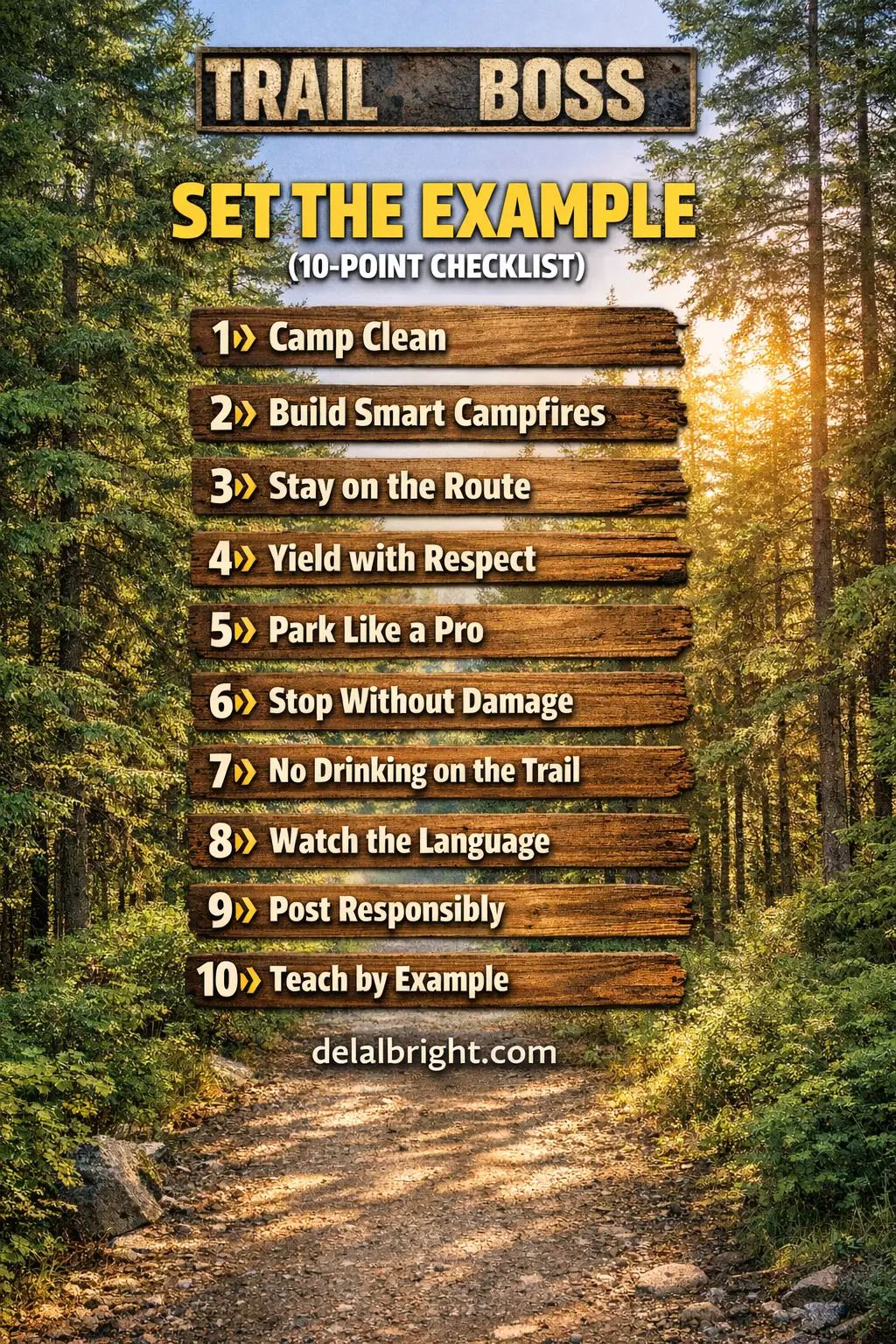
Set the Example
Because someone is always watching.
Whether you realize it or not, you are being watched.
By kids.
By first-timers.
By new Jeepers and side-by-side owners who don’t yet know “the culture.”
By land managers, rangers, volunteers, and agency folks.
By the public scrolling past your photos and videos on social media.
Like it or not, you are the example.
And if we want trails, dunes, deserts, forests, and backcountry access to survive, setting the right example isn’t optional anymore—it’s the job.
Act Like Kids and Newbies Are Watching
Because they are.
If you’ve been around a while, you already know the rules—written and unwritten. New folks don’t. They learn by watching what you do, not what you say.
If they see you:
Cut corners
Bend rules
Shrug at trash
Laugh off bad behavior
They assume that’s normal.
Trail ethics don’t start with signs or citations. They start with role models.
Camp Like You Want It Open Next Year
Setting the example at camp is simple—and powerful.
Pick up trash, even if it’s not yours
Grab the small stuff: cigarette butts, bottle caps, foil, zip ties
Keep camps clean enough that someone could move in tomorrow
Leave fire rings better than you found them
Drown fires completely—cold to the touch means cold
Lazy camping is one of the fastest ways to lose access.
Campfires: Not Bigger. Not Smarter. Just Responsible.
A massive bonfire doesn’t make you a legend. It makes you a liability.
Use existing fire rings
Keep fires reasonable in size
Follow seasonal fire restrictions—every time
Don’t burn trash (especially cans and plastics)
Never leave a fire unattended
One careless fire can shut down an entire area—and it has.
Don’t Be “That Guy” on the Trail
You know the one.
Setting the example while driving means:
Stay on designated routes—every time
Yield to slower, smaller, or less capable users
Yield uphill traffic when appropriate
Slow down near hikers, horses, bikes, and camps
Keep dust down around others
Access depends on shared use. Respect keeps the peace.
Park Smart (and Not in the Grass)
Pulling over for a photo or a quick break shouldn’t create damage.
Don’t block the trail
Don’t park off-route
Don’t stop in vegetation
Be aware of hot mufflers and dry grass
Pull completely clear when stopping
Five seconds of convenience can cause years of impact.
Alcohol and the Trail Don’t Mix
This shouldn’t need saying—but here we are.
No drinking while driving
No drinking on the trail
Save it for camp—and keep it responsible there too
One DUI or accident doesn’t just affect you. It affects everyone who recreates there.
Language Matters—More Than You Think
You may be comfortable with salty language. Others aren’t.
Watch your mouth around kids and families
Watch your language around land managers and officials
Don’t normalize aggressive or crude behavior
We don’t need to sanitize the outdoors—but respect goes a long way when relationships matter.
Social Media Is the New Front Country
What you post lives forever—and it travels far beyond your circle.
Before you post, ask:
Does this show good behavior?
Could this be misinterpreted?
Would I be comfortable with a ranger or agency director seeing this?
Photos and videos influence public perception. Post like access depends on it—because it does.
Respect Elders. Teach Newcomers.
Trail culture is handed down—not downloaded.
Listen to those who’ve been around
Help new folks without talking down to them
Correct gently, not publicly
Teach by example, not ego
Strong communities keep trails open. Divided ones don’t.
Set the Example—Even When No One’s Looking
Especially then.
Because the habits you practice alone are the ones you model in public.
If you want:
Trails to stay open
Camping to remain allowed
Motorized recreation to have a future
Then be the person others learn from.
Not the excuse land managers use to shut things down.
Final Thought
You don’t need a badge, a title, or a uniform to be a Trail Boss. You just need to set the example—every trip, every stop, every post.
Someone’s watching. Make it worth copying.
Trail Boss Checklist: Set the Example
Because someone is always watching.
1. Camp Clean—Every Time
Pick up trash, even if it isn’t yours. Yes, that includes cigarette butts, bottle caps, foil, and micro-trash.
2. Build Smart Campfires
Use existing rings, keep fires reasonable, follow restrictions, and leave fires dead cold.
3. Stay on the Route
No shortcuts. No “just this once.” Designated routes exist to protect access.
4. Yield with Respect
Yield to slower, smaller, or less capable users. Slow down near hikers, bikes, horses, and camps.
5. Park Like a Pro
Don’t block the trail. Don’t park in vegetation. Watch hot mufflers and dry grass.
6. Stop Without Causing Damage
Pull completely clear when stopping for photos or breaks. Never create new turnouts.
7. No Drinking on the Trail
Save alcohol for camp—and keep it responsible there.
8. Watch the Language
Kids, families, and land managers are often nearby. Respect goes a long way.
9. Post Responsibly
Social media is public. Post content you’d be comfortable showing a ranger or land manager.
10. Teach by Example
Newbies learn by watching. Set the standard you want copied.
