Responsible Trail Sanitation: Pack It In, Pack It Out (Every Time)
delalbright.com — Sustainable, Responsible, Common-Sense Overlanding
Whether you’re exploring the backroads, crawling into a quiet Sierra basin, or joining a caravan of overlanders for a weekend trip, sanitation is still one of the least talked-about issues in our community… and one of the most important. Sanitation issues can make or break our future access.
Many of the places we love—BLM land, Forest Service routes, high deserts, remote beaches, and rugged mountain trails—have zero toilets. No vaults. No outhouses. No facilities.
Yet more people than ever are exploring America’s public lands.
So where does all that human waste go?
If we don’t take responsibility, it ends up exactly where it shouldn’t: on the trail, in campsites, under rocks, behind trees, and in the form of those dreaded “white flowers” (crumpled toilet paper fluttering around like a sad trail marker). Nothing kills access faster, and nothing ruins the backcountry experience quicker.
It doesn’t matter what trail you’re on — good overlanders pack it out. Every time.
A Reality Check: What Happens When Nobody Packs It Out
This problem isn’t theoretical. Years ago, when the Rubicon was seeing heavy, unmanaged use, we collected numbers with the help of a sanitation engineer. During one three-month summer period:
35,000 trail users generated tons of human waste.
Because there were no toilets, that waste was either:
a) left on or near the trail, or
b) packed out by volunteer trail stewards.
And while the Rubicon is just one example, every popular overlanding corridor faces similar pressure today.
Burying it isn’t a reliable answer. Anyone who’s tried digging in rocky country knows:
1️⃣ You can’t always find soft ground.
2️⃣ Not everyone carries a shovel.
3️⃣ And most importantly — human waste migrates. Rain and runoff can move contamination downhill into streams, lakes, aquifers, and sensitive ecosystems.
Across the West, land managers deal with hundreds of thousands of taxpayer dollars worth of human-waste cleanup every year. It threatens access and gives anti-access groups ammunition we don’t need to hand them.
Responsible motorized recreationists can fix this.
We just have to pack it out.
Pack-It-Out Options
You don’t need a fancy overlanding rig to do this right. You just need a system that works for you. I am not selling anything here and I have no business relationships with any of these companies/suggestions. These are just options that I have used and seen work on the trail.
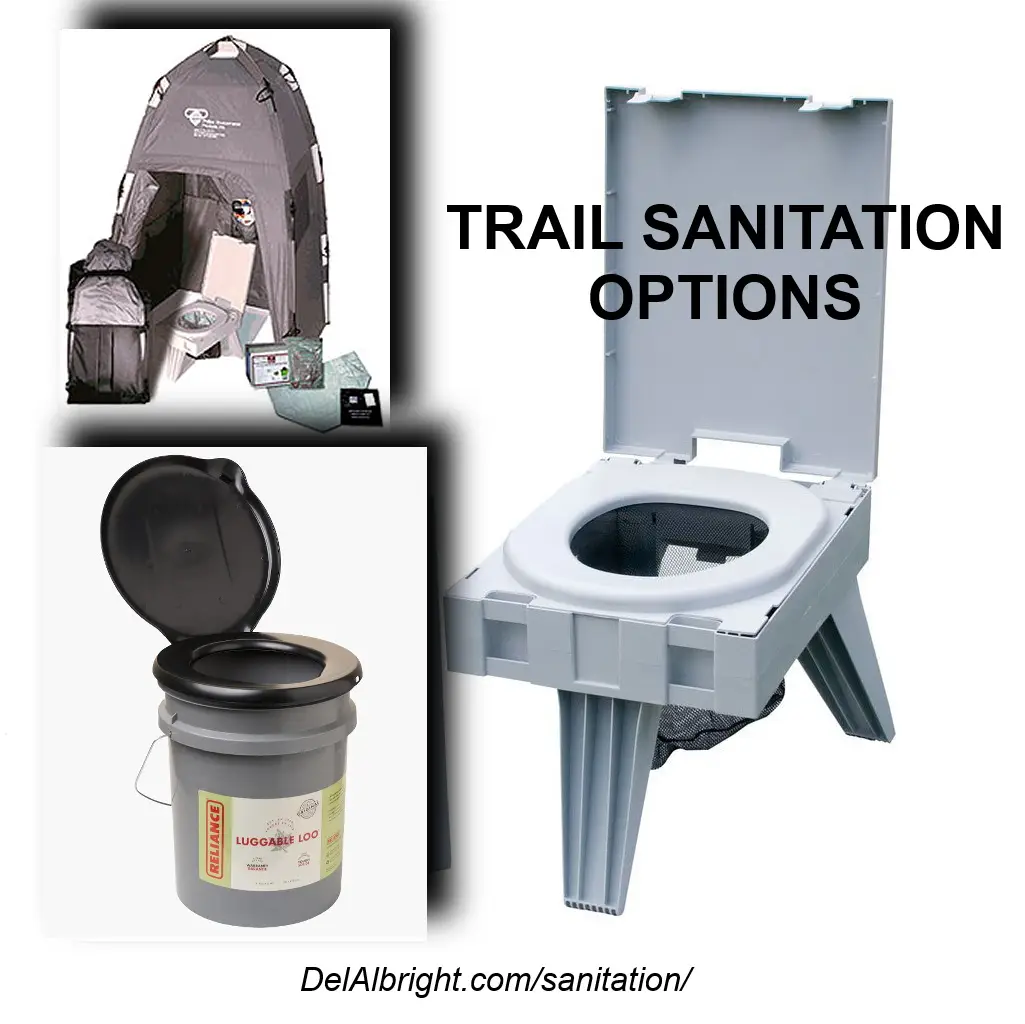
👍 The PETT Toilet System (Cleanwaste GO Anywhere)
This is my go-to system — I’ve tested it thoroughly.
Packs down small
No smell
Enzyme-treated waste (Wag Bag) becomes landfill safe
Works with or without a privacy tent
Easy setup, easy disposal
It’s simple, reliable, and effective for groups, families, and long trips.
Pro tips from years of field use:
Use the lid as a base on snow or soft ground to keep the legs from sinking.
The wag bags can handle multiple uses — just seal the inner (green) bag inside the outer (black) bag between uses.
Don’t put paper barriers inside during multi-use; let the enzymes do their job.
Keep your tent zipped to avoid fly invasions.
Pet curiosity won’t hurt them — the enzymes are non-toxic.
Once treated, the result is not a biohazard and can go into any dumpster or landfill.
👍 Luggable Loo / Bucket Toilets
A more budget-friendly option. Combine a lined bucket with:
PETT bags (Wag Bags)
Double-layered trash bags
Or commercial waste-treatment bags
It’s not glamorous, but it works great and is widely used in the RV, vanlife, and overlanding world.
👍 Digging a Cat Hole (Only When Legal & Appropriate)
If local regulations allow (many do not), a properly dug cat hole (slit-trench, latrine) can be acceptable.
But here’s the truth:
It fails far more often in the backcountry world than it succeeds.
Rocky ground, high traffic, lack of depth, shallow soils, winter conditions, and lazy follow-through all contribute to… yep… white flowers.
Cat holes are the last resort, not the standard.
The Bottom Line: Don’t Leave White Flowers on the Trail
If we want to keep four-wheeling/overlanding routes, dispersed camps, beaches, dunes, and backcountry trails open, we must:
Pack It Out — starting now, on every trip.
It’s the one solution that works everywhere, all the time.
I Want Your Input — Let’s Get the Conversation Going
I’m posting this not just to preach, but to learn from you.
What system do YOU use?
What works for families?
What’s your best privacy-tent setup?
Any hacks that make pack-it-out easier?
What problems have you seen on popular trails?
Drop your thoughts — the more we share good information, the better chance we have of keeping our public lands open and clean.
GET Del’s book on Landuse and Volunteerism