
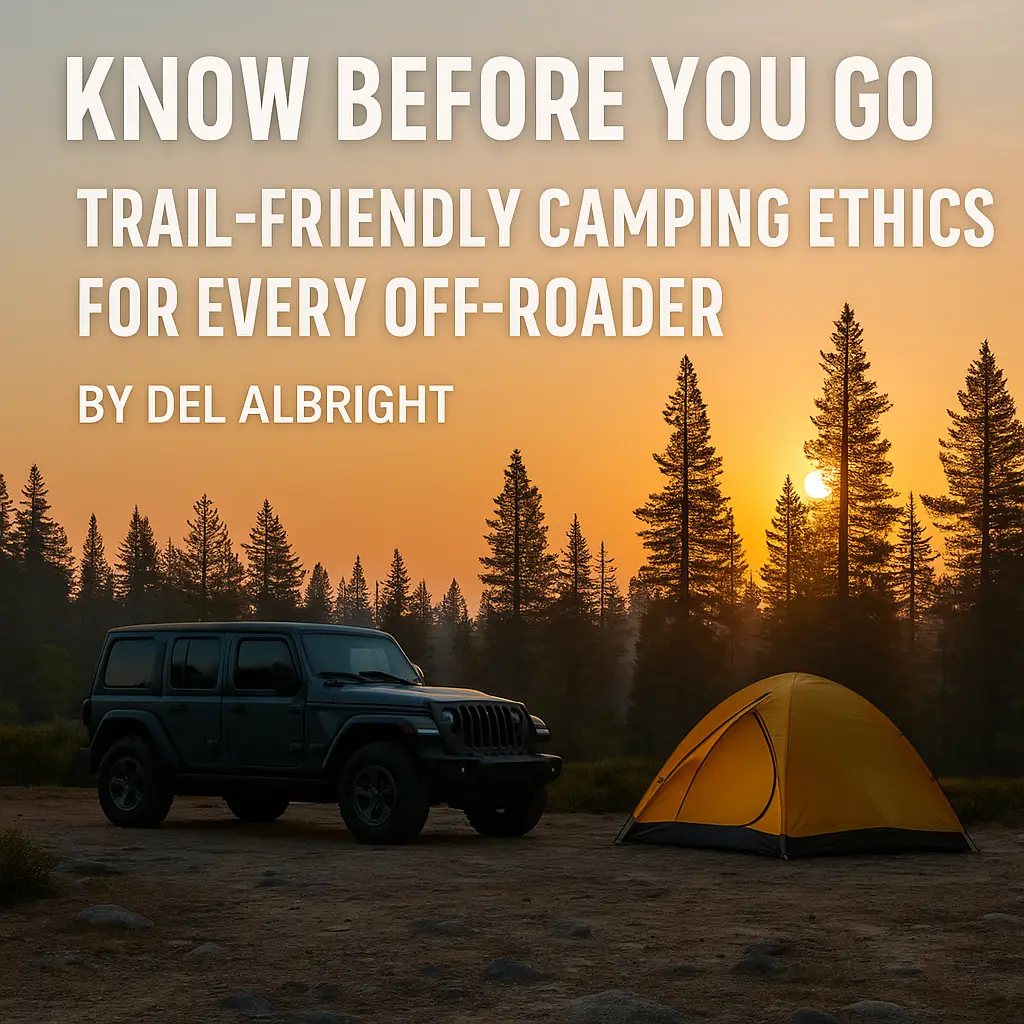
Know Before You Go: Trail-Friendly Camping Ethics for Every Off-Roader
By Del Albright
Camping on public lands is one of the greatest privileges we have in the off-road, motorized recreation, and overlanding world. Whether you’re rolling in with a Jeep, a side-by-side, an RV, or a rooftop tent, your choices at camp can either protect access… or put it at risk.
Good camping ethics aren’t complicated — they’re just part of being a responsible trail user and a leader in our outdoor community. Here are some solid, field-tested tips that help keep our backcountry clean, open, and enjoyable for everyone.
1. Give Your Neighbors Some Space
Nobody wants a tent or trailer parked right on top of them. You can pick a spot with a reasonable spacing distance and be careful in how you lay out your camp. Assess your neighbors’ camp to determine if you need more distance than you initially thought (party types vs. quiet types). A respectful campsite layout sets the tone for the entire trip.
2. Handle Bathroom Needs with Ethics
Human waste doesn’t magically disappear. Bring a pack-it-out system (wag bags, PETT system, etc.) and do not leave toilet paper “white flowers” behind. Pack out everything — waste and trash — every time.
3. Stay on Designated Trails When Selecting a Camp
Don’t cut new paths or drive off-trail just to get the “perfect” spot. Use established, marked, or durable sites. Staying on the trail protects soil, vegetation, wildlife habitat, and our reputation as responsible users.
4. If Things Get Too Noisy or Rowdy, Speak Up Politely
Most people don’t realize when they’re being disruptive. A respectful conversation usually fixes the problem. If it doesn’t, contact local authorities or, if available, site hosts. Purposeful rowdiness might need law enforcement, but that’s better than a ruined trip. Responsible recreation is a shared responsibility.
5. Tread Lightly and Set the Ethics Example
You might not realize it, but someone — especially kids — is always watching you.
Demonstrate leadership by:
Staying on the trail
Respecting others
Minimizing noise
Keeping camp clean
Leaving no trace
Our behavior today protects access tomorrow.
6. Do a Final Trash Call Sweep
Before rolling out, take one minute for a final walk-around. Pick up all trash — yours and anything left by the last group. Don’t forget cigarette butts; they do not decompose and often end up in waterways.
7. Camp Away From Water Sources
Keep a 100-foot buffer from lakes, streams, or ponds. This helps protect fragile ecosystems and keeps soap, fuel, oil, and food waste out of the water.
Note: Many forests and public-land units require a minimum of 100 feet from water for camping or waste disposal, but some districts use 150 feet or even 200 feet, depending on local conditions. Always check the specific rules for the area you’re visiting and follow the strictest guidance. Protecting riparian areas helps keep our trails and public lands open.
8. Keep Noise Down After 10 PM
Most campgrounds have quiet hours, but dispersed camping areas rely on courtesy and common sense. Turn off loud devices and enjoy the peace and quiet. The stars and campfire glow are better than any stereo.
9. Get a Campfire Permit — And Follow Restrictions
Many camping areas require a permit for stoves, lanterns, or fires (even gas ones). Always check current fire restrictions and weather conditions. Wildfire seasons are getting longer and hotter, so stay sharp and stay legal.
10. Carry — and Use — a Spill Kit
Fluids happen.
Carry a spill kit with absorbent pads, gloves, and disposal bags. Clean up leaks immediately to prevent soil and water contamination. It’s one of the simplest ways to protect our trails.
11. Leave the Area Looking Better
Clean up fire rings/pits—Scatter unused firewood (unless you know the next person will appreciate some starter wood). Reset rocks and logs. The goal is simple: let the next group arrive and wonder if anyone camped there at all.
Final Thoughts
Camping responsibly on public lands is part of our commitment as off-roaders, four-wheelers, and overlanders. It protects access, builds trust with land managers, and shows the outdoor community that we care about the places we love.
Set the example.
Leave it better.
And help keep our trails open for generations to come.
Get notified when Del’s new book on Responsible Recreation is released
