
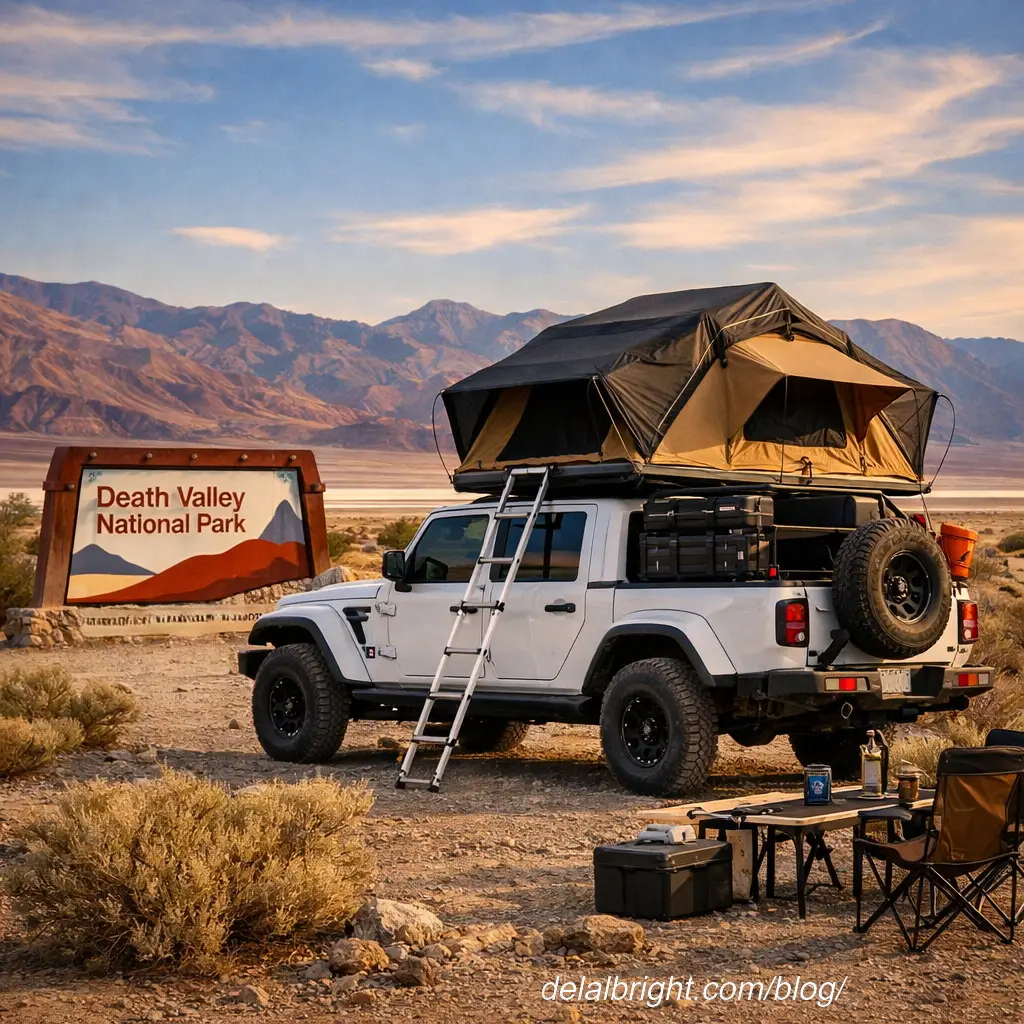
Proven Ways to Keep Trails Open While Overlanding Death Valley
By Del Albright
Overlanding is one of the fastest-growing segments of motorized outdoor recreation, and for good reason. It combines travel, camping, history, self-reliance, and exploration into one experience. Few places deliver that experience as powerfully—or as honestly—as Death Valley National Park.
As stewards of public lands, we carry a responsibility to explore places like Death Valley thoughtfully, so future generations can enjoy the same freedom we value today. I offer these travel tips based on my 30+ years of exploring this magical place.
Death Valley is a mosaic of deep canyons, broad valleys, rugged alluvial fans, salt flats, and sharply rising mountain ranges that feel almost unreal. Covering more than 3 million acres, it is the largest national park in the contiguous United States, stretching nearly 140 miles long from north to south.
A Quick Geology Reality Check
Despite its name, Death Valley is not technically a “valley” in the classic sense.
Most valleys—like Yosemite—were carved by water or glaciers. Death Valley is a graben, a large block of the Earth’s crust that dropped downward between two parallel fault systems as the surrounding mountain ranges uplifted. This tectonic stretching is part of the larger Basin and Range Province, which defines much of Nevada and eastern California.
The valley floor continues to subside while the Panamint Range and surrounding mountains rise, creating extreme vertical relief. In just a short horizontal distance, you move from Badwater Basin (282 feet below sea level) to peaks over 11,000 feet high.
That geologic reality explains why Death Valley holds the titles for:
• Hottest
• Driest
• Lowest elevation
…in North America
It also explains why the landscape is so fragile—and why mistakes last a very long time here.
Access Has Changed — Responsibility Hasn’t
Over the past several decades, large portions of Death Valley have been designated as congressionally protected Wilderness, which permanently closed many historic roads and routes I traveled starting more than 30 years ago. While access has been reduced, there is still a tremendous amount of legal overlanding opportunity available—if you do your homework.
Park rules, dispersed camping restrictions, and road conditions can change quickly due to weather, flooding, or resource concerns. Always check the Death Valley National Park website before your trip and confirm current regulations.
Responsible overlanding here means:
• not crowding limited, easy-access camps
• sharing roads and space respectfully
• traveling legally and intentionally
• understanding that your behavior affects everyone who comes next
Why This Matters
• Overland travel is booming
• Trail and road use is increasing
• National Park managers are watching closely
• Dispersed camping has expanded dramatically
• Vehicle variety and size are increasing
• Resource damage leads directly to closures
Our access depends on our actions.
6 Tips for Overlanding Death Valley
1. Stay on Designated Routes
Never cut switchbacks, drive cross-country, or create bypasses. Tire tracks in the desert can last decades, not weeks. Use reliable navigation tools such as OnX, Gaia GPS, Avenza, Overland Bound One, or official park maps, and verify which routes are legal before you roll.
If it looks like a road but isn’t on the map—don’t drive it.
2. Use Previously Impacted Campsites
Camp only in areas that show clear, historic use and are legal under park rules. In Death Valley, dispersed camping typically requires a minimum distance from paved roads, water sources, and day-use areas.
Avoid creating new campsites. The desert does not “bounce back.”
UPDATE NOTE: From Ben Easley, California Overlanders (link to Facebook below): recent changes to camping regs in certain areas where dispersed camping was once permitted (e.g., Hole in the Wall, Echo Canyon, Cottonwood Canyon, etc.). These areas and a few others no longer permit free-for-all dispersed camping; instead, visitors must register and pay a small fee online to access a specific campsite.
3. Minimize Campfire Impact
Outside of developed campgrounds, fires are generally prohibited in Death Valley. Fire scars, ash, and illegal wood gathering cause lasting damage.
Plan to cook with:
• camp stoves
• propane fire pits (only where currently allowed)
Always verify current fire restrictions before your trip—and be prepared to go without a fire.
4. Pack It In, Pack It Out — Then Do Better
Everything you bring in comes out with you. That includes:
• trash
• food waste, and human waste
• broken gear
When possible, pick up trash left by others. “Leave it better than you found it” still matters—especially in high-use areas.
5. Respect the Park and Its History
Death Valley is rich with cultural, historic, and geological features. Collecting rocks, artifacts, plants, or historic items is illegal in national parks.
Take photos, notes, and memories, but leave everything else exactly where it is.
6. Educate and Lead by Example
Good behavior spreads faster than lectures.
Share responsible travel habits with your group. Help newcomers understand desert ethics. Post smart examples on social media. Promote Leave No Trace and Tread Lightly! principles. Your example may be the reason a trail stays open.
Let’s Be the Solution
Overlanding offers freedom, solitude, challenge, and discovery—but none of that is guaranteed. If we want continued access to places like Death Valley, we must show that motorized recreation can coexist with protection, respect, and restraint.
Travel smart. Camp lightly. Share the land.
Tag your responsible trips with #SustainableOverlanding and #KeepItWild and help set the standard for how this community shows up.
Know Before You Go: Death Valley Overlanding Checklist
Do this before your tires ever hit the park boundary.
📍 Route & Access
✔ Confirm which roads are currently open (flood damage is common)
✔ Verify routes are legal for street-licensed vehicles
✔ Download offline maps (cell service is unreliable or nonexistent)
✔ Know where Wilderness boundaries begin — they are not all marked on the ground
🏕 Camping Rules
✔ Confirm where dispersed camping is allowed
✔ Follow distance requirements from pavement, water, and day-use areas
✔ Use previously impacted campsites
✔ Have a backup plan if your first choice is closed or occupied
🔥 Fire & Cooking
✔ Check current fire restrictions before departure
✔ Plan to use a camp stove instead of an open fire
✔ Never collect wood or leave fire scars
✔ Be ready to go fire-free if required
💧 Water, Fuel & Supplies
✔ Carry more water than you think you need (then add extra)
✔ Know your fuel range — stations are far apart and hours vary (and fuel in the Park is very expensive)
✔ Bring emergency food that doesn’t require cooking
✔ Assume no services once you leave pavement
🚙 Vehicle Readiness
✔ Inspect tires (including spare), cooling system, and belts
✔ Carry basic recovery gear and know how to use it
✔ Secure all loads — washboard roads shake everything loose
✔ Expect sharp rock, heat, and long distances between help
📡 Communication & Safety
✔ Tell someone your route and return time
✔ Carry a satellite communicator or PLB if possible
✔ Don’t rely on cell phones — coverage is extremely limited
✔ Understand that self-rescue may be your only option
🌵 Desert Ethics
✔ Stay on established roads — no cross-country travel
✔ Leave rocks, artifacts, and historic sites untouched
✔ Pack out everything, including micro-trash
✔ Remember: desert damage lasts decades
Bottom Line
Death Valley is spectacular, unforgiving, and honest. Good planning makes for a memorable visit, and isn’t about fear — it’s about respect.
Respect for the land.
Respect for the park.
Respect for the next traveler.
Good planning also shows respect for the folks who don’t have to come to your rescue!
I can think of no more exciting and awe-inspiring place than Death Valley to enjoy your overlanding setup. Get out there and have some desert fun.
VISIT California Overlanders Group here.
LEARN more about Sustainable Overlanding here.
VISIT Death Valley National Park website.
SIGN UP to get Notified of Del’s new book release: Field Guide to Responsible Recreation
Special thanks to these business partners
